
BOUDREAUX’S COLLISION · REPAIR EDUCATION
Plastic Parts and Refinish Preparation
Plastic components can require identification and preparation suitable for their substrate and coating system. Bare plastic, an existing painted surface and a repaired area may need different steps. Surface cleaning alone does not describe the complete preparation process.
Illustration: Plastic Parts and Refinish Preparation
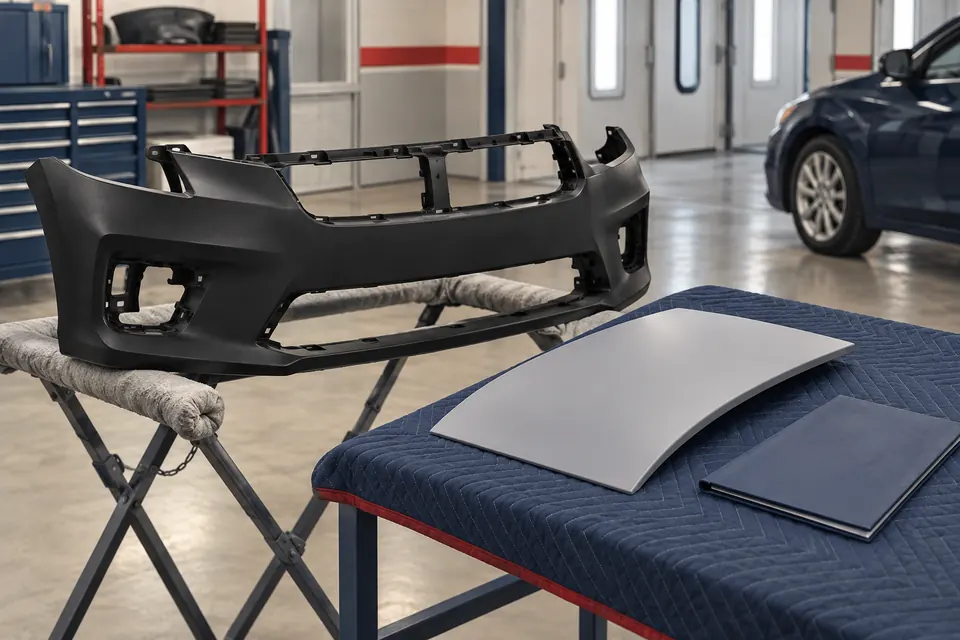
Generated educational illustration: plastic cover surface condition review. Not an actual customer repair, diagnostic result, staff member or Boudreaux’s facility.
What to Clarify for Your Vehicle
Ask which substrate and products are involved and whether the repair method suits the component. Bumper sensors and mounting restrictions are separate issues from the paint system. A refinishing operation should not be assumed to restore a damaged bracket or sensor mount.
Plastic preparation depends on the actual part
A plastic bumper cover is not prepared in exactly the same way as a steel panel. Plastic type, the condition of the surface and whether the replacement arrives bare or coated can affect the preparation process. A part that looks ready for paint may still require specific cleaning, adhesion or substrate steps under the applicable product instructions.
Existing finish, contamination and previous repairs also matter. The estimate should distinguish preparing a replacement part from repairing and refinishing the part already on the vehicle. Those operations have different starting conditions.
Appearance and function need separate checks
A refinished cover can look attractive while an attachment or nearby sensor issue remains unresolved. Conversely, a structurally intact cover may need refinishing for scratches or damaged coating. Surface work does not answer every question about the assembly.
On vehicles with sensing equipment near the cover, the repair plan may include restrictions relating to material, repair location or coating. Those requirements must come from vehicle-specific information. A general statement that all painted bumper covers are suitable for all radar systems would be unreliable.
What the owner should identify
Tell the shop about previous bumper repairs, protective films or coatings and any warning messages after the impact. If the cover was replaced previously, a receipt or part description may help identify its history. The shop can then evaluate the substrate and applicable repair requirements.
At pickup, review both the finish and the documented assembly checks. If the surface later shows peeling or another concern, photograph the location and contact the repairer before applying touch-up products. The cause needs assessment; appearance alone cannot establish whether the issue originated in preparation, material or later damage.
Further repair information
I-CAR: bare-plastic preparation background
General background and product examples do not replace the applicable instructions for the actual vehicle, material and operation.
Related Guidance
Keep finish appearance and attached equipment in separate questions
A completed paint surface should not be read as an explanation of every component associated with the plastic part. Ask which attachments or installed equipment are relevant to the actual repair and which applicable checks remain. The vehicle procedure should guide any equipment-related work; not every bumper or plastic panel carries the same features.
At delivery, retain the final component description, scope revisions and any care instructions. If a finish or fit concern appears, give the location and timing without sanding, polishing or applying another product to test it. Keep any warning or function observation separate from the appearance concern and use the actual message wording where available. The provider should assess the real condition. This page does not establish a universal plastic repair method, paint product or certification at both shops.