
BOUDREAUX’S COLLISION · REPAIR EDUCATION
Spray-Out Cards in Color Matching
A spray-out card shows a sample of a proposed paint mix applied using relevant conditions. Comparing a physical sample with the vehicle can reveal a mismatch that a paint code alone does not resolve. Metallic orientation and viewing angle can affect the comparison.
Illustration: Spray-Out Cards in Color Matching
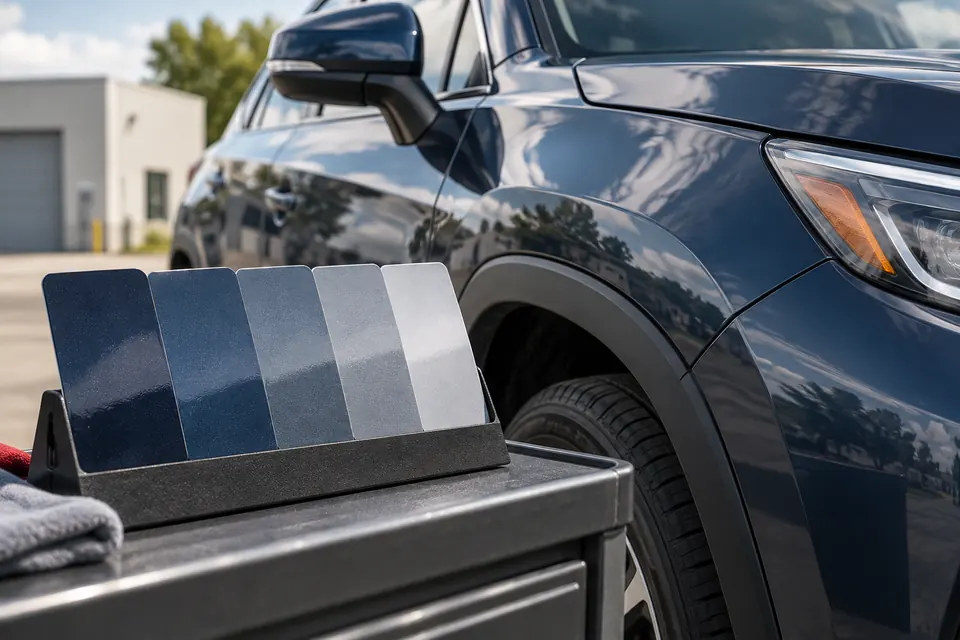
Generated educational illustration: sprayout sample and vehicle comparison. Not an actual customer repair, diagnostic result, staff member or Boudreaux’s facility.
What to Clarify for Your Vehicle
Ask how the sample is evaluated on the actual vehicle and whether a different variant or adjustment is needed. A spray-out supports color selection but does not independently guarantee the entire refinished panel’s appearance. Preparation, application and the repair boundary still matter.
Why a color code is only the starting point
A vehicle paint code identifies a color family or formula reference. It does not guarantee that a newly mixed batch will look identical to the finish already on the car. Production variations, previous refinishing, weather exposure and the way effect pigments reflect light can influence the comparison. The repair plan therefore needs a visual match to the vehicle, rather than relying on the code alone.
A spray-out card is a separate sample sprayed with the proposed material and application approach. Comparing that sample with the vehicle lets the refinisher evaluate a candidate before committing it to a repaired panel. It is a planning tool; a photograph of the card alone cannot prove a match under every viewing condition.
What a useful comparison looks for
Color comparison includes more than whether two surfaces look equally light or dark head-on. Hue, saturation and the appearance at an angle can all matter. Metallic and pearl finishes can change noticeably as the viewing angle changes. A sample that looks convincing indoors may reveal a difference in daylight.
Consider a repaired front fender next to an original door. The question is how those adjacent surfaces will read together on the assembled car. Depending on the finish and repair plan, a controlled transition into an adjacent panel may be part of the scope. That is different from promising that a single formula will make every isolated panel look identical.
Questions that clarify the refinishing scope
Ask which panels are being repaired, which are being refinished and whether any adjacent panels are included for a color transition. Those are separate scope decisions. A spray-out comparison can help inform them, but does not replace the refinisher’s assessment of the vehicle and applicable paint-system instructions.
At pickup, review the repaired area from normal viewing distances and more than one angle. If you notice a concern, identify the panel boundary and lighting condition rather than describing the entire car as the wrong color. Specific observations help the shop evaluate the issue without guessing at its cause.
Further repair information
PPG: spray-out card background
General background and product examples do not replace the applicable instructions for the actual vehicle, material and operation.
Related Guidance
Keep sample evaluation and completed repair review distinct
A sample can support the planning process without representing every finished panel or the complete repair. Ask which area will be refinished or blended and how that scope relates to the color evaluation. The decision about adjoining work should be explained for the actual vehicle; a sample card alone is not a universal instruction to refinish the entire car.
At delivery, review a color concern by identifying the panel, timing and viewing circumstances. Keep the final refinish description and any provided care instructions together. Do not polish, apply a coating or experiment with another product to see whether a perceived difference disappears. Let the provider assess the actual finish and relevant record. This guide explains what to ask about color planning; it does not promise an exact appearance judgment from a screen image or establish one warranty or paint product for both shops.