
BOUDREAUX’S COLLISION · REPAIR EDUCATION
Parts Inspection Before Installation
Receiving a part is different from verifying that it is correct and usable. Damage in transit, missing attachments, incompatible connectors or an incorrect variant can affect the repair sequence. Problems may be found before the part is fitted to the vehicle.
From the Boudreaux’s archive
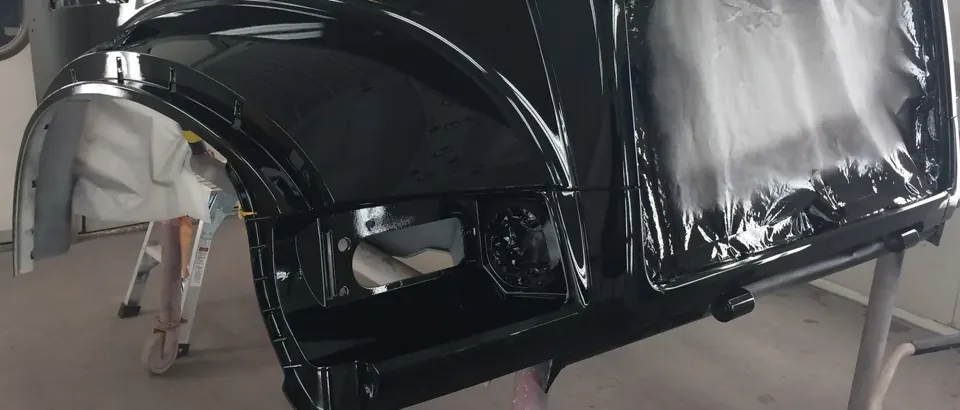
Owner-supplied archive detail of detached exterior components. It illustrates parts-condition and assembly context only; it does not document arrival inspection, catalog identity, source category, acceptance for installation or completed fit checks.
What to Clarify for Your Vehicle
Ask whether a discovered issue changes the work plan, authorization or expected timing. An arrival date is not a guarantee of installation that day. Fit and condition checks support a complete repair; they are not simply a delay added after parts delivery.
Arrival, identification and inspection are separate milestones
A part arriving at the shop is a supply milestone. Confirming that it is the intended component and reviewing its condition are different steps. A delivery update does not automatically establish that the part is ready for installation or refinishing.
The assessment can concern the component description, included hardware, visible condition and relevant fit. What matters depends on the part and vehicle. Ask which checks apply rather than assuming every packaged item needs an identical inspection routine.
This distinction helps explain why parts delivery and repair completion can have different dates. Installation and the work around the part may still remain.
How a supply concern can change the sequence
Suppose a delivered component does not match the intended configuration or has a condition that needs supplier review. The next repair stage may depend on resolving that issue. The useful update identifies the specific concern and next action rather than saying only that parts are delayed.
That example does not imply that any particular delivery is damaged or incorrect. It explains why a receiving review is relevant before work proceeds. Ask whether the part has arrived, been confirmed or is waiting for a response.
Keep the identified item and status in your notes. A later update should refer to that same component so that a different part’s arrival is not mistaken for resolution of the original issue.
Questions after a delivery update
- Which component arrived?
- Has its configuration and included content been confirmed?
- Is any condition or supplier question unresolved?
- Does the next stage need fit checking or another preparation?
- What work remains before installation and handoff?
A precise status makes scheduling discussions more useful. It separates an item being physically present from the vehicle being ready for the next stage and avoids treating all supply information as a completion promise.
Related Guidance
Keep fit review and final installation as separate milestones
Arrival inspection and any applicable fit review can answer different questions. Ask whether the component has reached the stage needed for the proposed finishing or installation operation. A part that matches its catalog description still needs to be considered in the context of the actual assembly and applicable repair information. Exterior appearance alone does not settle every mounting or equipment question.
At delivery, retain the final part description, scope revisions and relevant instructions together. If an assembly later shows a fit or function concern, describe the observed location and timing without declaring shipment damage or a wrong order to be the cause. Do not dismantle the repaired piece to inspect hidden labels or packaging history. The provider should review the actual condition and record. A well-kept parts explanation helps that review without pretending that one inspection note documents every completed operation.