
BOUDREAUX’S COLLISION · REPAIR EDUCATION
Part Numbers and Vehicle Equipment Matching
A part should match the vehicle’s build and installed equipment, not merely its model name. Trim level, production variation, sensors and connectors can affect selection. A visually similar part can differ in functions or attachments.
Illustration: Part Numbers and Vehicle Equipment Matching
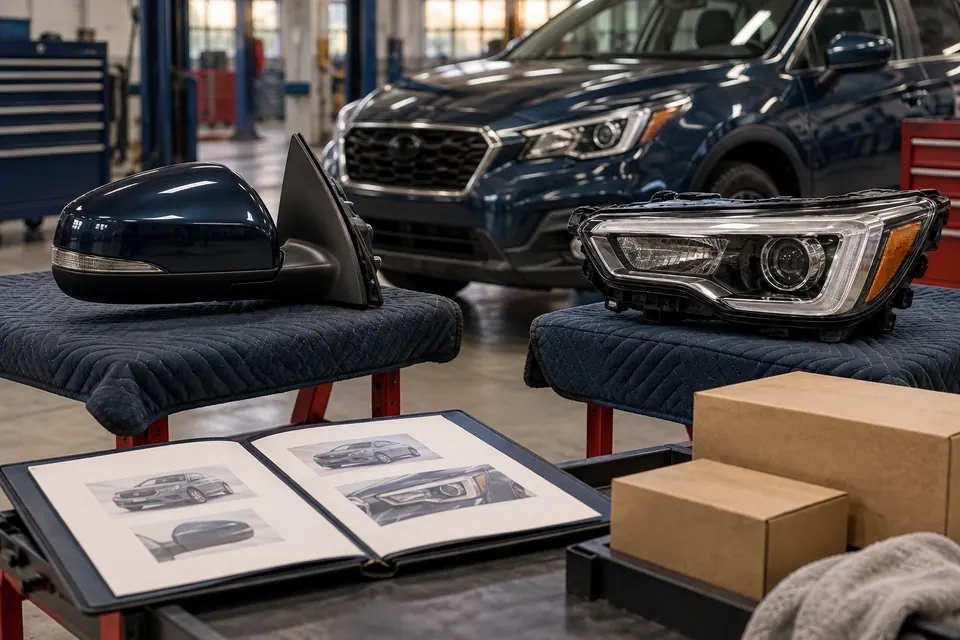
Generated educational illustration: vehicle configuration part identification. Not an actual customer repair, diagnostic result, staff member or Boudreaux’s facility.
What to Clarify for Your Vehicle
Ask what vehicle information was used to select the part and whether the VIN and equipment were checked. If the replacement differs from what was removed, clarify the reason before installation. Correct identification reduces confusion but does not replace inspection and required installation procedures.
An exact part number answers more than whether the shape fits
Vehicle identification, production differences and installed equipment can change the applicable service part. A component that looks similar in a photograph is not automatically the correct assembly. Part identification should account for the actual vehicle and affected location.
This matters especially when an assembly contains equipment that is not obvious from outside. A mirror, lamp or bumper-related piece may have a different configuration even when its visible shape appears alike. The estimate description should make the proposed component understandable.
An owner can provide the year, make, model and relevant vehicle information, then ask the shop how the exact part is identified. Do not order a replacement solely by matching an online image.
Compare what each assembly includes
A price comparison is meaningful only when the descriptions concern equivalent parts. One listing may include hardware or electronics that another does not. A finish treatment can also be separate from the part itself.
For an illustration, two mirror descriptions could differ in included functions. The correct question is which assembly matches the vehicle and what comes with it, not simply which mirror is less expensive. The same comparison principle applies to other collision components.
Keep the part description with the estimate version. If identification changes during planning, ask what vehicle information or supplier confirmation led to the change.
A useful part-identification checklist
- Confirm the exact vehicle and affected side or location.
- Identify relevant installed equipment.
- Clarify the proposed part number or assembly description.
- Check what hardware, electronics or related pieces are included.
- Ask whether finishing or setup is recorded separately.
A part being available does not establish that it is the correct part. Identification, supply, fit checking and installation are separate milestones. Ask which one is currently confirmed before treating an order update as a finished repair decision.
Further repair information
Ford: VIN-based parts identification (manufacturer example)
General background and manufacturer examples do not replace applicable information for the actual vehicle and operation.
Related Guidance
Separate correct identification from readiness for installation
A correctly identified part can still need arrival inspection, fit review or another operation before installation. Ask what the current update actually confirms: identification, ordering, delivery, acceptance after inspection or completed installation. These are separate milestones. A shipping notice does not establish that the part is at the shop or that every needed component is ready.
If a mismatch is found, ask which feature, number or included component explains it and how the next arrangement affects the plan. Keep the revised description with the repair record so later calls use the current part information. At delivery, ask about the relevant assembly functions and any instructions for follow-up. Do not dismantle a repaired component to search for a part label yourself. A clear record makes an equipment or fit concern easier to discuss without turning an owner’s guess into a parts diagnosis.