
BOUDREAUX’S COLLISION · REPAIR EDUCATION
Heat Restrictions in High-Strength Steel Repair
Heat can change the properties of some high-strength steels. Whether heating, straightening or sectioning is permitted depends on the exact material and location. A repair method used on older mild-steel components may be prohibited on a modern reinforcement.
Illustration: Heat Restrictions in High-Strength Steel Repair
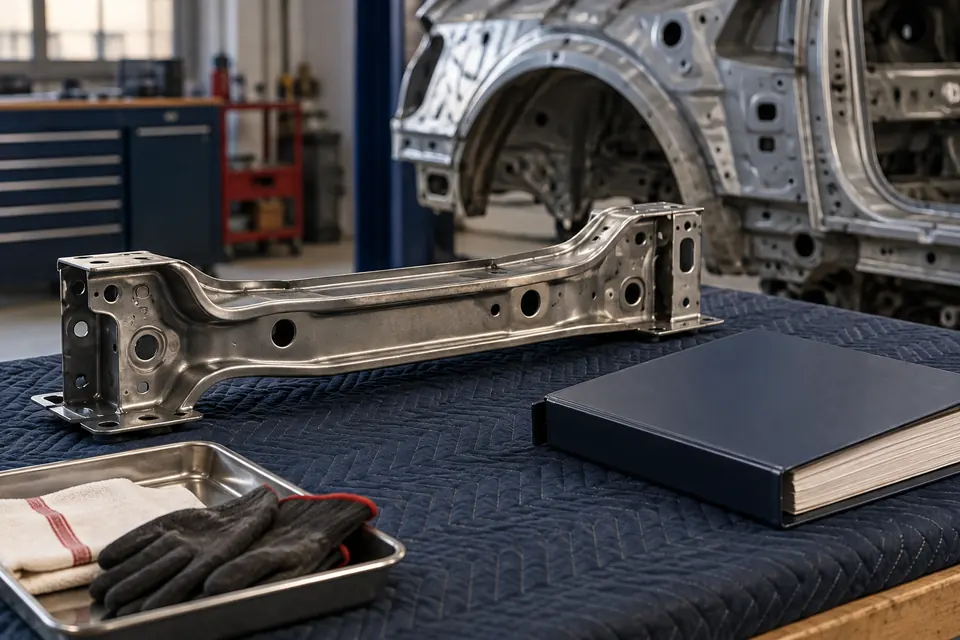
Generated educational illustration: steel grade and heat permission review. Not an actual customer repair, diagnostic result, staff member or Boudreaux’s facility.
What to Clarify for Your Vehicle
Ask how the material was identified and which repair instruction permits the proposed method. Color, magnet response or visible shape alone may not provide all required material information. Do not assume a component can be heated back into shape simply because it is steel.
Boudreaux’s uses OEM parts for structural and suspension components. Clarify the identified part, source, condition and applicable requirements, together with any separate claim review or payment question.
Identify the material before discussing a repair method
High-strength steel is not one universal material category with one permitted repair method. Vehicle makers identify materials and requirements for particular components. Ask which part and current information support the proposed approach.
A component’s ability to be moved back into shape is not the same question as whether the proposed method is permitted. Heat restrictions can be important to that decision. This guide does not specify temperatures, straightening techniques or a workaround for a restricted component.
I-CAR’s manufacturer-specific summaries show that restrictions differ. The actual vehicle’s current repair information takes priority over an assumption drawn from a different brand, model or material.
A replacement decision can concern more than appearance
Imagine a proposal to replace a damaged reinforcement even though an owner believes the shape could be corrected. The useful question is which material or repairability requirement supports replacement, not merely whether the dent seems physically movable.
Ask the shop to identify the component and proposed method in plain language. If a repair approach is proposed, ask what information permits it for that part. If replacement is proposed, ask what finding or restriction makes that the appropriate scope.
The example does not establish that every high-strength component must be replaced after every impact. It explains why the decision must be specific to the part, damage and procedure.
Questions that avoid a broad steel assumption
- Which component and material classification are involved?
- What current vehicle repair information applies?
- Is the proposed method permitted for that component?
- What damage finding affects repairability?
- What related joining and protection operations follow?
Keep the explanation with the estimate. Do not substitute a general online heat limit or a familiar repair on another vehicle for the relevant requirement on your own vehicle.
Further repair information
I-CAR: high-strength steel repairability
I-CAR: BMW/Mini heat restrictions (manufacturer example)
General background and manufacturer examples do not replace applicable information for the actual vehicle and operation.
Related Guidance
Understand a material-based change to the repair scope
A proposal can change when further access or procedure research identifies a restriction relevant to the damaged part. Ask what finding or requirement explains the move from a proposed repair to replacement or another permitted operation. Retain that explanation with the dated revision. The fact that a component could be made to look straight does not independently establish that it may be treated that way.
Disclose any previous repair or heating history you actually know, keeping uncertainty clear. Do not scrape, heat or bend the area to investigate it yourself. At delivery, retain the relevant scope and repair explanation. If a later fit or control concern appears, describe the observation and timing rather than selecting a material failure from an online article. The provider should assess the condition; an attractive exterior or equipment photograph is not a substitute for the component-specific repair decision.