
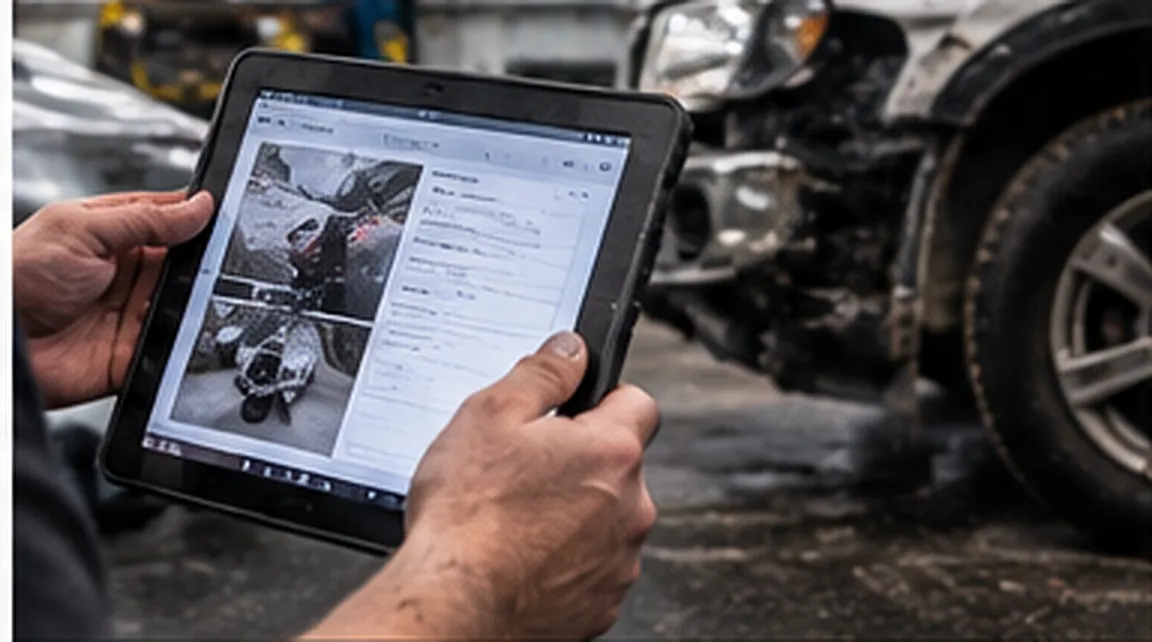
Illustrative example
Why the First Estimate Can Change
An initial estimate may be written before damaged components are removed. Once the vehicle is inspected more completely, additional damage or repair operations may become apparent.
Examples can include hidden body damage, structural considerations, damaged components behind panels and repair operations required by manufacturer procedures.
What Is a Supplement?
A supplement is additional repair documentation submitted after damage or required operations are identified that were not included in the original estimate.
A supplement does not automatically mean anyone made a mistake. Some collision damage simply cannot be fully seen until the repair process progresses.
Start With Photos
You can begin an estimate request from your phone. Send the vehicle information, describe the damage and upload useful photos.
Photos help show visible damage, but they cannot reveal everything behind a bumper, panel or structural component. A photo-based estimate should be treated as a starting point until the vehicle can be properly inspected.
Related Repair Guidance
What to bring when you already have a claim
If a claim has been opened, bring the claim reference, insurer contact and estimate version you received. Explain whether the estimate was prepared from photos or from a physical inspection. Those details help the shop understand what the document represents and what still needs assessment.
Your role is to describe the vehicle and your concerns, not to translate every estimating term. Note which area was hit, whether the vehicle was towed and what changed afterward. A latch problem, new vibration or warning message belongs in that conversation even when it is not obvious in an exterior photograph.
Keep original correspondence. When a later estimate or explanation arrives, save it as a new version. That makes it possible to discuss the sequence without confusing a preliminary document with the current repair plan.
How useful claims assistance differs from a coverage promise
Useful assistance helps connect repair findings, photos, estimates and questions. It does not mean the shop can guarantee an insurer’s coverage decision, waive a deductible or promise that every proposed operation will receive payment. Ask the shop about the repair basis and ask the insurer about the policy and payment basis.
For an illustration, a shop may identify an attachment that is damaged once a cover is removed. The repair question is how that condition affects the proposed work. The payment question is how the insurer handles that documented addition. Keeping both questions clear gives each party something specific to answer.
If an explanation is unclear, ask for the affected line item and supporting reason in plain language. You can then compare the physical finding, proposed operation and insurer response without treating the estimate total as the only relevant fact.
Questions worth asking before authorizing the next stage
- Which damage has been confirmed and which area still needs access?
- Is the current estimate preliminary or based on the latest inspection?
- What work am I being asked to authorize now?
- How will additional findings be communicated?
- Which payment decisions remain with the insurer?
- What information or response is needed from me?
Request clarification before agreeing to work you do not understand. If the repair scope changes, ask how that change is recorded and which next step requires your response. Do not assume that an insurer’s estimate automatically describes every operation the vehicle will need.
Start with the location that will assess your vehicle
Contact the selected Boudreaux’s shop before arranging a tow or drop-off. New Orleans and Luling are the two verified locations. Bring the claim details to the shop that is handling the assessment so documents and questions remain attached to the correct vehicle and receiving team.
You can begin through the estimate request, then review the insurance help hub for comparison and communication guides. If there is no insurance claim, say that in your request. The vehicle still needs an appropriate assessment; the payment conversation simply follows a different path.
For New Orleans, call 504-309-3092. For Luling, call 985-331-0707. An online request begins contact and does not itself confirm a repair appointment.
Questions before your next step
A closer look at this topic
Generated educational illustration — Insurance Claims Assistance.