
From the Boudreaux’s archive
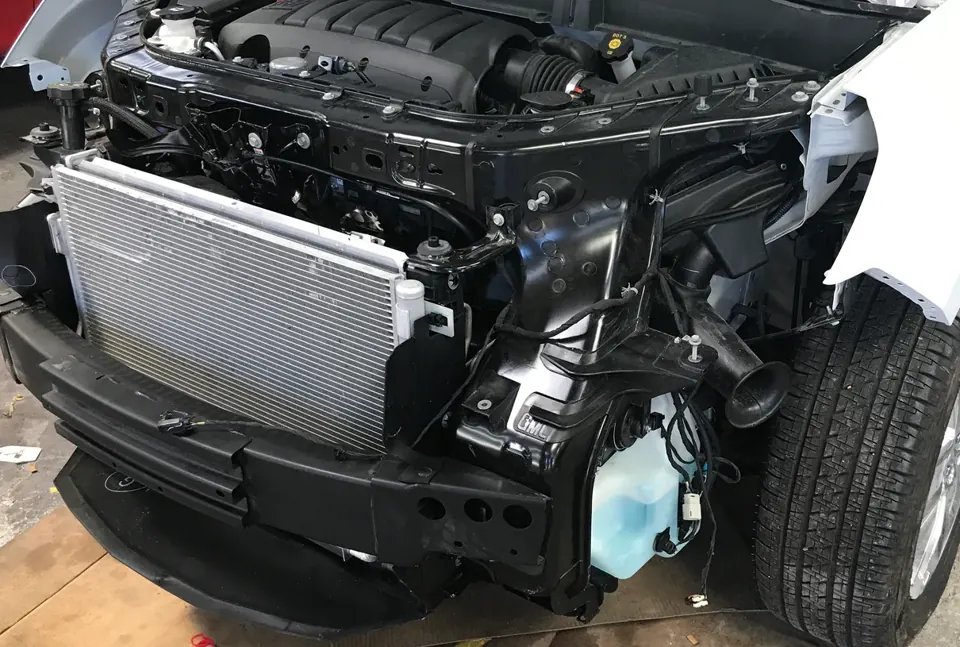
Owner-supplied GMC-project archive detail with front components exposed. It shows access context, not a diagnosis, impact causation, completed checks or permission to operate a vehicle.
Can a photo estimate identify every mechanical problem?
Mechanical damage can be concealed behind body panels or underneath the vehicle. A front-end impact, for example, may affect cooling components or mounts that are not clear in an exterior photo.
A leak, noise or change in steering should be described, but the symptom does not identify a final repair. Inspection may require access and vehicle-specific tests. Ask which hidden areas are checked and what additional findings could change the plan.
How This Fits Into the Repair Plan
Identify the observed behavior, affected area and known earlier history. Let appropriate access and assessment establish the component condition and supported correction; keep any unresolved limitation clear in the revised scope.
Related Repair Guidance
Keep concealed questions provisional until assessed
A mechanical area outside the initial view can need assessment without being automatically declared damaged or sound. Ask which actual component or concern remains open and what information will settle it. Concealment is a limit on the initial view, not a complete diagnosis by itself.
Describe the impact and any new behavior, warning, leak or movement concern. Mention earlier issues and repairs where known. Safe observations help direct assessment without proving that every hidden condition belongs to the collision.
An exterior photograph can show contact location and visible context while leaving attachments or mechanical components outside the view. Ask what the image establishes and which question needs authorized access, inspection or measurement.
Do not dismantle unfamiliar components or run the vehicle to reveal more for an estimate request. The supported assessment should follow the actual condition and applicable information. Explain access limits rather than creating an improvised test.
Related reading: Collision-Related Mechanical Damage and Hidden Collision Damage and Insurance Supplements.
Distinguish access, diagnosis and the supported correction
Authorized access can identify a relevant finding, but the finding and repair operation still need explanation. Ask which component is affected and what applicable information supports repair, replacement or another task. A broad hidden-damage label should not conceal the actual decision.
Electronic information and physical condition are different questions. A no-code report does not independently assess every concealed mechanical area. Ask which relevant checks establish the condition and whether a limitation remains.
A mechanical part and the body or frame area that locates it may need separate findings. Ask whether the proposed scope addresses the attached component, the mounting area or both. A replacement line should not silently become proof of every adjoining condition.
If a related setup or assistance requirement follows the actual work, clarify which operation applies. Diagnosis, physical correction, alignment and calibration can have different purposes. Keep the relevant requirements connected without treating them as one interchangeable task.
Make the revised plan understandable
If access or investigation changes the proposal, request the dated revision and reason. Ask whether it follows confirmed damage, component identification, applicable requirements or an earlier condition. Not every added operation should be explained with the same generic phrase.
Where insurance is involved, separate the shop’s supported proposal from the insurer’s actual review. A supplement request is not automatically approval, payment or authorization. Clarify unresolved responsibility before changed work proceeds.
At pickup, ask how the completed operations correspond to the final scope and which relevant records are available. A finished exterior cannot independently document every concealed component or required check. Discuss any remaining symptom or limitation with the team.
For a later concern, record the conditions and timing and contact Boudreaux’s before deliberate testing or alterations. The actual record helps distinguish a new observation from the completed operation without guessing from the word hidden.
If several new lines appear together, ask whether they follow one finding or different applicable requirements. Related explanations can be connected while remaining different purposes. Clear component and operation descriptions make the revision useful without treating every unobserved area as automatic damage or every submitted document as a final claim decision.