
Illustration: What a Claim Number Does in the Repair Process
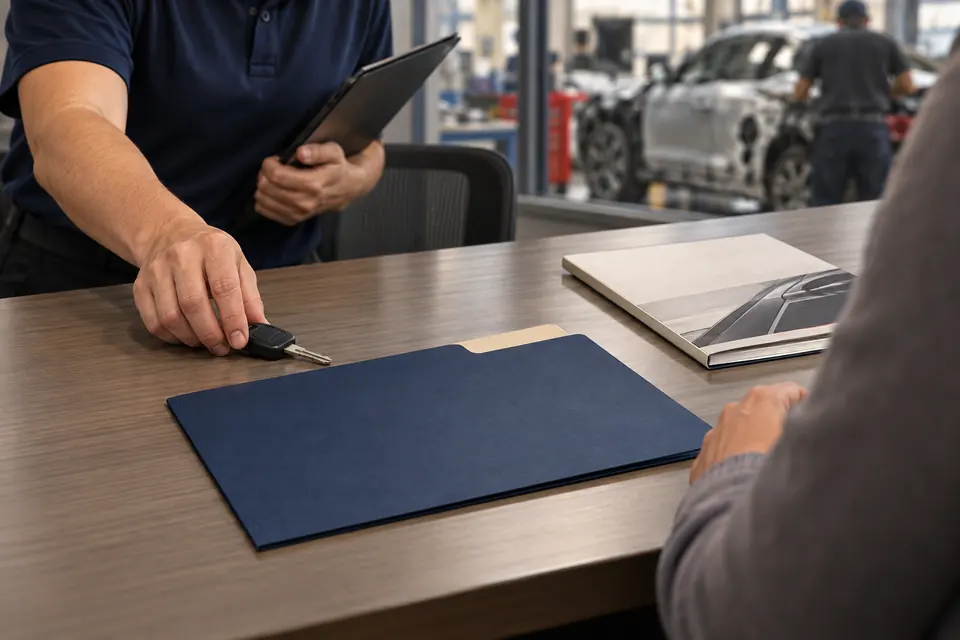
Generated educational illustration: claim file identification context. Not an actual customer repair, diagnostic result, staff member or Boudreaux’s facility.
Does a claim number mean my repair is approved?
A claim number helps the shop and insurer identify the insurance file. It does not itself authorize every operation or confirm what the insurer will pay.
Provide the number together with the insurer and relevant contact or estimate information. Ask about the next approval step and who is responsible for it. Keep repair authorization, payment decisions and technical repair requirements distinct when discussing the file.
How This Fits Into the Repair Plan
Use the identifier to locate the correct matter, then name the actual decision and dated proposal. Keep technical assessment, authorization and insurer payment decisions separate.
Related Repair Guidance
The number identifies a matter rather than deciding it
A claim number helps identify a specific insurance matter and connect relevant communication. It is not, by itself, a coverage decision, complete repair scope or authorization for every operation. Ask which actual decision is being discussed alongside the identifier.
Keep the vehicle identity, insurer and current document version clear where they are needed. A number alone may not explain the technical question or which estimate the conversation refers to.
If a claim detail changes or was entered incorrectly, contact the responsible party and explain the correction. State which information is current rather than sending unexplained duplicate versions. Accurate identification supports a clearer discussion.
Avoid posting the identifier with private documents in public reviews or social comments. Ask the shop or insurer how to provide necessary information through the actual conversation.
Related reading: Claim Information a Body Shop Needs and Initial Insurance Estimates vs the Final Repair Plan.
Separate identification from assessment and approval
The vehicle still needs the relevant technical assessment. Ask which damage findings are confirmed and what remains provisional until access, measurement or research. A claim being opened does not independently diagnose unseen components.
An insurer estimate and the shop’s supported plan can have different scope or assumptions. Compare component descriptions, methods and related operations rather than treating the claim number as proof that the documents are identical.
If further findings change the plan, request the dated revision and explanation. Ask whether the change concerns a component, method, required operation or verification. Keep that information with the claim communication so a new total can be understood.
Coverage, payment responsibility and repair authorization should be clarified for the actual arrangement. Ask the insurer about its decision and the shop about the supported work and agreement. A familiar identifier does not settle every question between the parties.
Use the identifier with a clear next-step question
When following up, identify the matter and ask which decision remains open. A claim-review update and a technical repair update can have different purposes. Clarify who is following each question and what action resolves it.
Confirm a receiving or pickup arrangement separately with the shop. A claim number does not reserve a visit, establish safe driving or authorize an unattended drop-off. Use the actual location and vehicle condition in that conversation.
Keep relevant dated estimates and explanations together for completion and follow-up. If a later concern appears, use the vehicle and repair record as well as the claim identifier where relevant. The number alone does not describe what work was completed.
Boudreaux’s can discuss the actual vehicle and scope. Clarify the actual coverage decision, review status and next update with the insurer responsible for the claim. Current Louisiana Department of Insurance resources can help with policy or claim-review questions that need clarification.
For current consumer information, use the Louisiana Department of Insurance auto resources.