
BOUDREAUX’S COLLISION · REPAIR EDUCATION
When an Insurance Estimate Omits a Required Repair Item
If the shop identifies an operation missing from the estimate, ask for the inspection finding or procedure that supports it. The technical need, repair authorization and insurer payment are separate questions.
Illustration: When an Insurance Estimate Omits a Required Repair Item
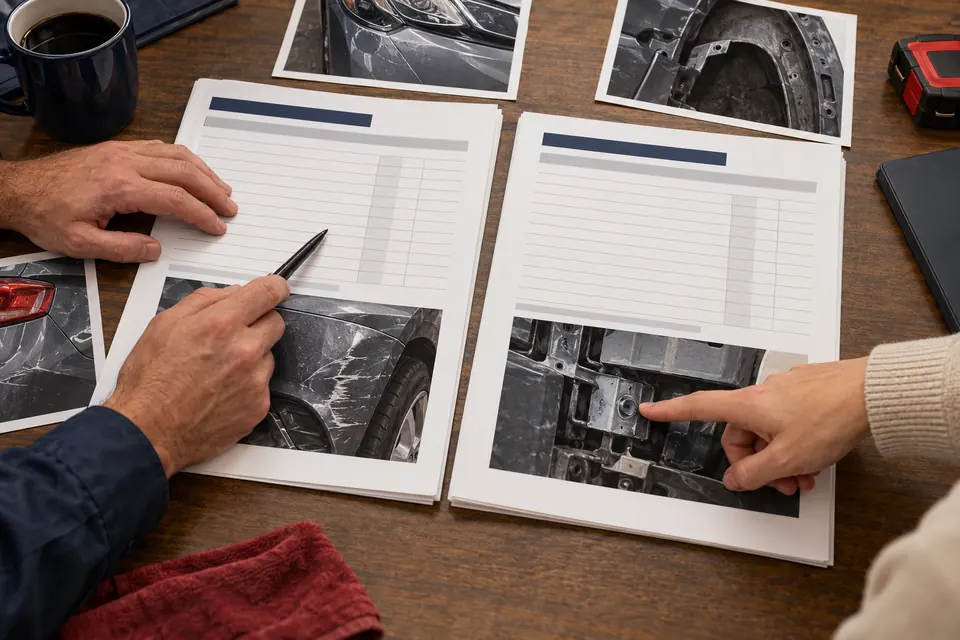
Generated educational illustration: missing estimate operation evidence review. Not an actual customer repair, diagnostic result, staff member or Boudreaux’s facility.
What should I ask when an estimate omits an operation?
If the shop identifies an operation missing from the estimate, ask for the inspection finding or procedure that supports it. The technical need, repair authorization and insurer payment are separate questions.
The shop may supply a supplement or supporting documentation. Ask the insurer for its explanation of unresolved payment items, and retain written communications. This guide does not promise a coverage outcome or replace qualified advice for a dispute; it helps keep the conversation tied to documented requirements.
How This Fits Into the Repair Plan
Name the disputed operation, connect it with the supported finding and identify the document version sent for review. Then clarify the separate technical, authorization and payment responses still needed.
Related Repair Guidance
Identify the missing item before debating the total
Start by asking the shop to name the component or operation it believes is missing and explain why it belongs in the plan. A broad statement that the estimate is incomplete does not tell you which question needs to be resolved. The line, its purpose and the supporting finding make the discussion actionable.
Ask whether the first estimate had access to the area involved. A photo-based or exterior assessment can leave an inspection question open. If later access established the item, request that explanation with the revised version so the new information is visible to everyone discussing the repair.
An omission can also concern an operation rather than a major part. Ask what the operation accomplishes and which relevant information supports it. Its size on the estimate is not a measure of its importance to the work, but importance should be explained with the actual requirement rather than asserted generally.
For a hypothetical example, a revised plan might identify an installation-related item beside an already listed component. The useful question is what supports that item’s inclusion and whether another line already accounts for it. This example does not establish the scope or payment outcome for your vehicle.
Make the supporting explanation address the specific question
Request the evidence connected to the missing line. A photograph should identify the component or area; a procedure reference should relate to the vehicle and proposed operation; a parts explanation should clarify what is included or separately required. General information about collision repair may not answer the line-specific question.
Ask whether the item is absent, described differently or included elsewhere in the estimate. Different terminology can make two documents appear to disagree even before their actual scope is compared. A clear mapping between the descriptions can help distinguish a wording question from a true scope difference.
If a revision is submitted, ask which document version and supporting information were sent. Keep the submission and any response together. A request for clarification is a next step to understand; it does not automatically establish either approval or rejection of the work.
If the insurer disputes the item, ask for the reason in writing and have the shop explain the technical support for its proposed operation. Keep these explanations distinct. A repair requirement and a payment decision concern different responsibilities even when they refer to the same line.
Clarify your decision before additional work proceeds
Ask the shop what authorization is needed and what payment question remains open. Request a current estimate and an explanation of any amount you may be responsible for. Do not assume that asking the insurer to review an omitted item automatically authorizes the shop to perform it.
Discuss whether the unresolved item controls parts ordering, an assembly stage or another operation. Identify the next milestone and the person following up. An unsettled line can affect sequencing, but a changed estimate total alone does not establish how much time the job will take.
For policy or claim questions that remain unclear, consult the Louisiana Department of Insurance’s consumer resources. Those resources provide an official path for assistance; this website does not decide coverage or promise a particular dispute outcome.
Contact the Boudreaux’s location handling the vehicle with the estimate date, line description and question you want answered. New Orleans and Luling can discuss the proposed work and current documents for that job. Keep the revised plan, supporting explanation and next update together so the discussion follows the actual issue.