
IMMEDIATE NEXT STEPS
Before deciding whether to repair or replace
- Get to a safe location if you haven’t already.
- Do not assume the vehicle is safe to drive just because it moves — if you’re unsure, arrange towing or contact your shop before driving further.
- Photograph the visible damage from a few angles.
- Start an estimate online, or contact your shop directly.
WHAT YOU MAY SEE
Visible Signs
- A dent, crease, scrape or distorted body panel
- Paint damage, corrosion risk or a panel that no longer fits correctly
- Damage near lamps, sensors, seams or adjacent panels
WHAT MAY BE HIDDEN
Not Always Obvious
- Inner structure, mounts or reinforcement behind the panel
- Material limitations and manufacturer repair guidance
- Adjacent damage that changes the repair-versus-replace decision
VEHICLE SYSTEMS POTENTIALLY INVOLVED
What Panel Repair vs Replacement Can Affect
HOW WE ASSESS IT
From What You Can See to What the Vehicle Can Prove
1
LOOK
Visible Damage
Document the obvious impact first.
2
ACCESS
Hidden Areas
Teardown can expose what installed parts conceal.
3
VERIFY
Measurements & Scans
Objective information confirms what appearance alone can’t.
INSURANCE & ESTIMATE GUIDANCE
Your Estimate May Change After Inspection
An initial estimate reflects what’s visible when it’s written. Disassembly can reveal additional documented damage that changes the repair plan.
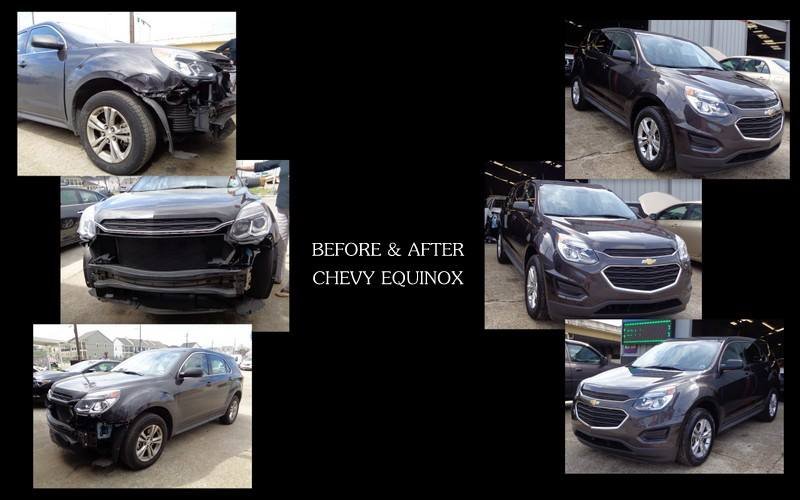
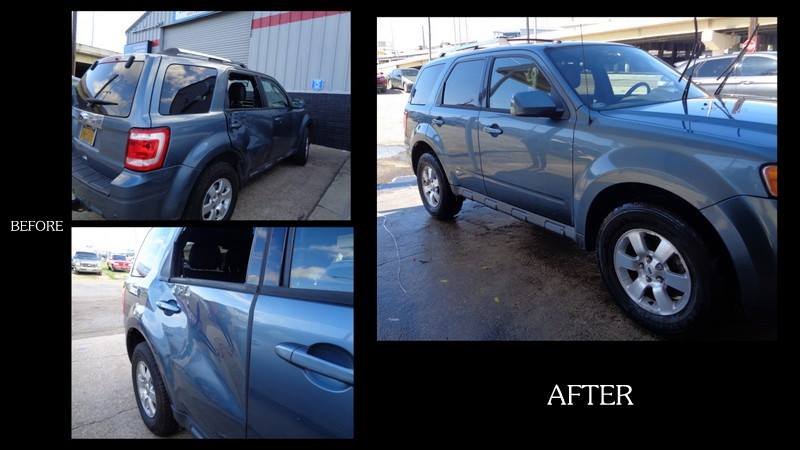
Illustration: Panel Repair vs Replacement
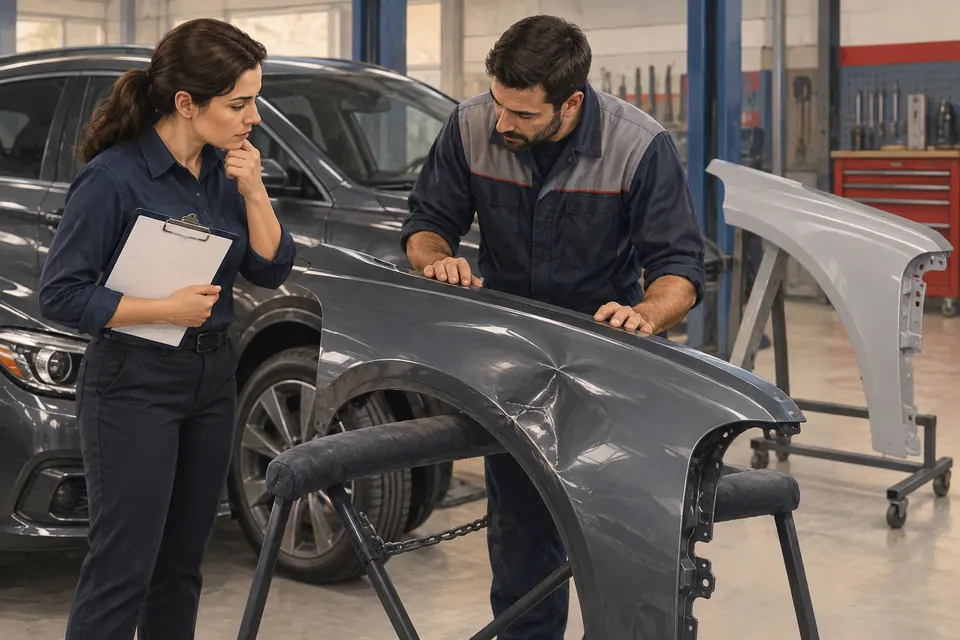
Generated educational illustration: panel repair replacement scope review. Not an actual customer repair, diagnostic result, staff member or Boudreaux’s facility.
The panel name and material come before the decision
Ask the estimator to identify the actual damaged component and its location. An outer panel, an inner reinforcement and an adjoining structural part can occupy the same general area while having different roles. A broad description of panel damage can otherwise conceal the distinction that matters to the proposed method.
Material and construction affect the assessment. The permitted approach for one component should not be transferred to another solely because both appear dented. Ask which vehicle-specific information and confirmed findings support repairing or replacing the identified part.
Share the vehicle identity, known earlier repairs and modifications in the area. Explain what you know and what is uncertain. A paint finish that looks original does not independently establish the history of the component beneath it.
For a hypothetical comparison, two exterior dents might look alike in photographs while the components differ in material or adjoining requirements. The pictures provide visual context, but the actual assessment needs to establish the relevant facts before the same method can be assumed.
Compare the supported scope, not just the main part price
A repair proposal can include work beyond the damaged spot, and a replacement proposal can include more than the new panel. Ask how access, attachments, adjoining areas, protection, refinishing and relevant checks connect to the chosen operation. The main line is not the complete repair plan.
If partial replacement is discussed, ask which applicable procedure permits the proposed method and location. A general statement that cutting or joining is common does not explain whether it is appropriate for that component. Do not select a joining point from a picture or online example.
Ask what remains open if the decision needs more access, measurement or procedure research. A preliminary estimate can identify a question without settling it. Request the action that will resolve the uncertainty and the expected update point.
When comparing estimates, identify whether they include the same component, method and related operations. A lower total can reflect different scope rather than the same work at a lower price. Ask for explanations of the line differences before treating the documents as interchangeable.
Parts source and availability are additional questions. A proposed alternative still needs to be evaluated for compatibility and the supported work. Discuss any changed description, cost and authorization instead of assuming availability alone makes it suitable.
Follow a changed decision through the repair record
If inspection changes the choice, request the current dated estimate and the finding or requirement behind the revision. Ask whether it affects parts, related operations, verification or the next stage. Keep that explanation with the estimate so later discussions follow the actual decision.
Where an insurer is involved, distinguish the technical proposal from claim review and payment. Ask the shop about the supported work and the insurer about its decision for the claim. Clarify any open responsibility before authorizing a change.
At pickup, ask how the completed work relates to the final scope and which relevant records are supplied. A finished exterior can provide visible context but does not identify every attachment, concealed treatment or technical operation by itself.
If a later concern arises, record the location and timing and contact the repairing shop before altering the area. Ask about the appropriate assessment and the applicable follow-up terms. An education page does not establish a universal warranty or diagnose the cause from an exterior image.
Boudreaux’s New Orleans and Luling teams can discuss the actual vehicle, findings and proposed operations. Use the estimate date and component name when asking for clarification. The useful result is a supported decision and understandable scope, rather than a blanket rule that every dent is repairable or every damaged panel needs replacement.
FREQUENTLY ASKED QUESTIONS