
SUV side-area damage and completed exterior
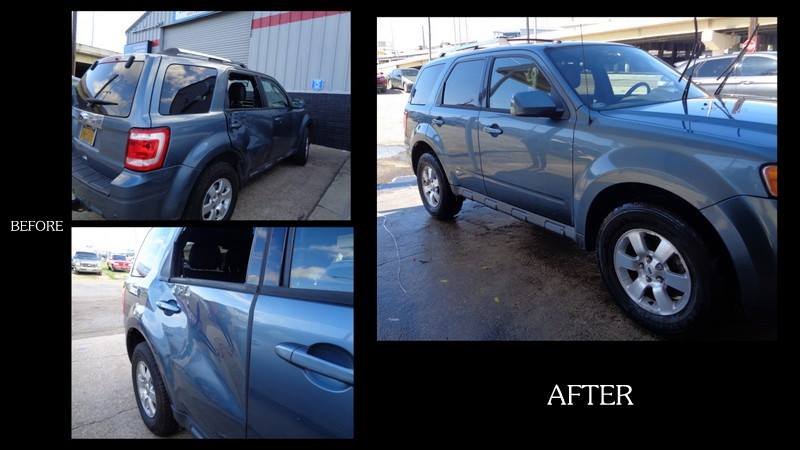
Original Boudreaux’s archive comparison: side-area damage in the before views and the completed exterior in the after view. The photographs do not establish the complete technical repair scope.
Chevrolet Equinox front-end damage and completed exterior
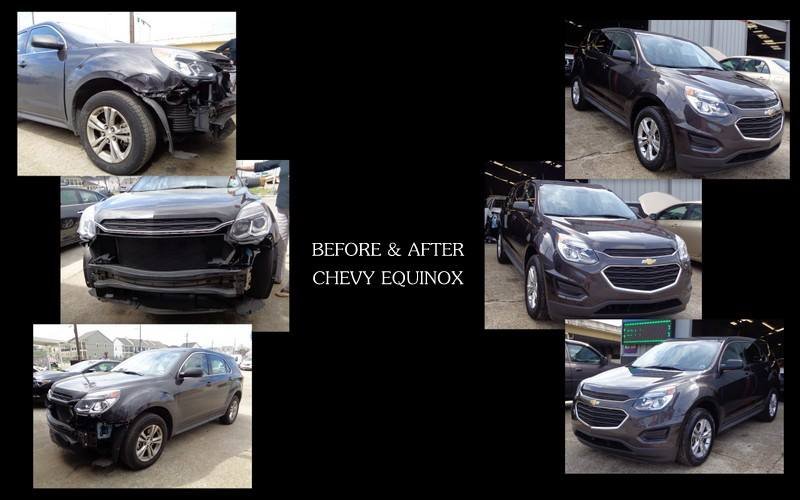
Original Boudreaux’s archive comparison: front-end damage and completed exterior views. No parts list, structural measurement, calibration result or completion time is inferred from these photographs.
New Orleans workshop and repair archive
These customer-supplied photographs from 2021 add workshop and repair-stage context to the comparison boards above. The captions identify what is visible and the historical source. They do not establish current equipment inventory, certifications, a complete repair method, or activity at the Luling shop.
New Orleans workshop interior
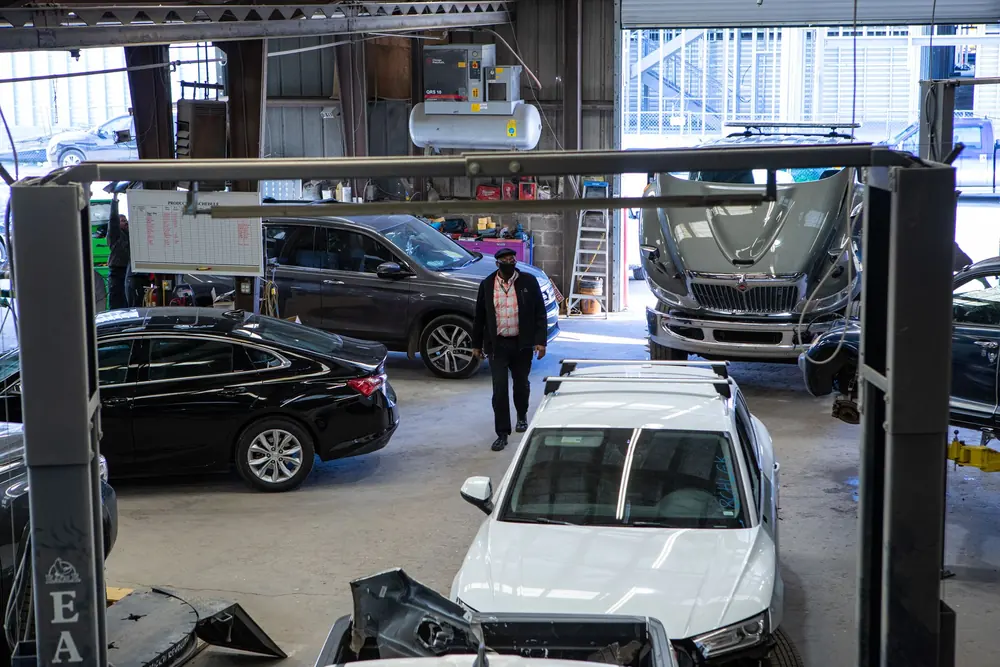
Customer-supplied archive photo (2021): Interior of the New Orleans workshop in the customer-supplied archive. Historical example; the repair procedure for a particular vehicle must be confirmed separately.
Removed-panel handling
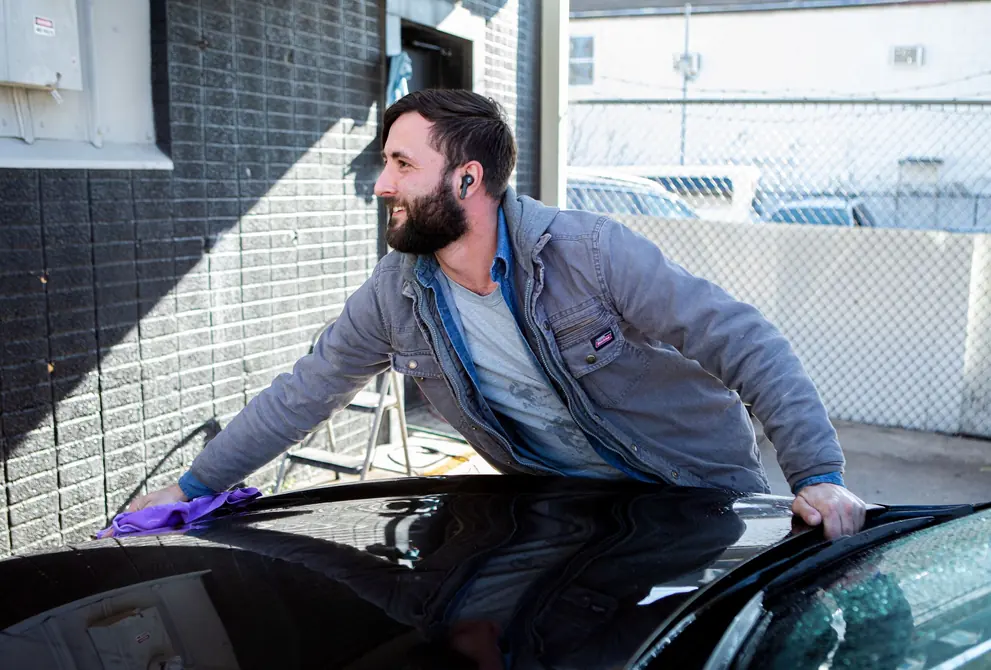
Customer-supplied archive photo (2021): Technician handling a removed vehicle panel at the New Orleans shop. Historical example; the repair procedure for a particular vehicle must be confirmed separately.
Body-section welding
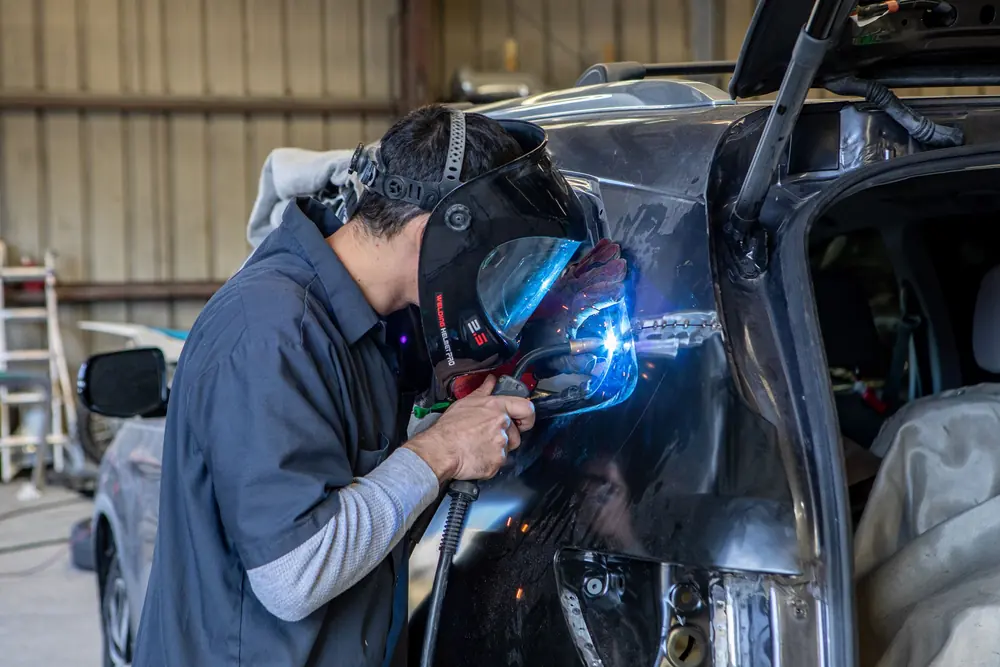
Customer-supplied archive photo (2021): Technician welding a vehicle body section using protective equipment. Historical example; the repair procedure for a particular vehicle must be confirmed separately.
Refinishing work in the booth
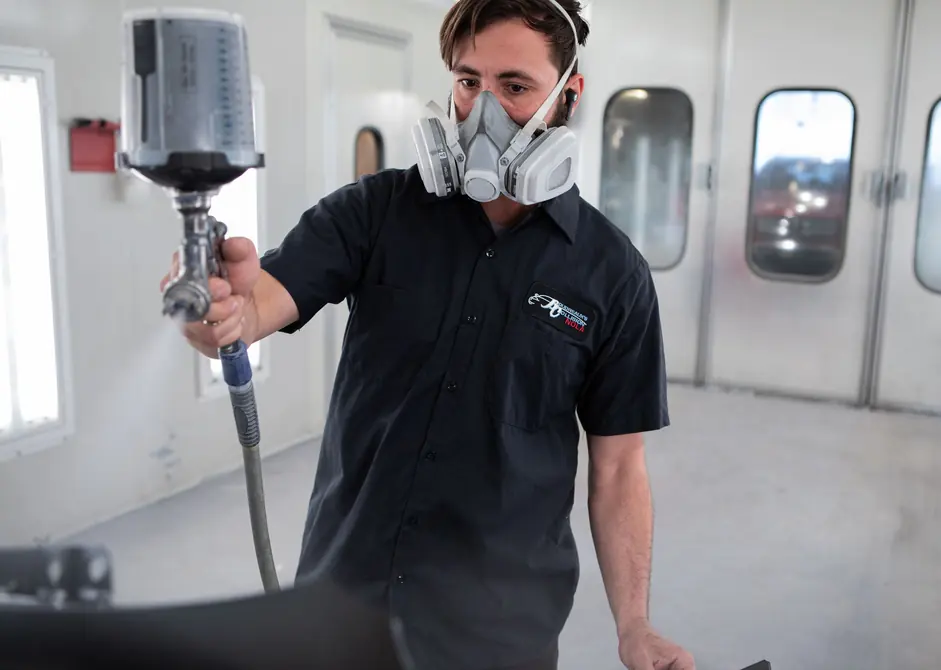
Customer-supplied archive photo (2021): Refinishing technician holding a spray gun in a paint booth. Historical example; the repair procedure for a particular vehicle must be confirmed separately.
Look for Context, Not Just a Finished Image
A finished vehicle can show the visible result. It cannot by itself show hidden damage, structural measurements, calibration status, corrosion protection or every operation in the repair plan. Captions and related pages provide the missing context.
If You Are Sharing Photos
Photos should show the vehicle and damage clearly without exposing unnecessary personal information, license-plate details or unrelated people. Use the estimate form instructions for the safest way to share images with the shop.
Choose the next page from what you want to understand
The archive comparisons show visible damage and completed exterior views. Use Before & After to compare that visual sequence, or Real Repair Cases to understand the information that would connect photographs with a complete repair record. The Repair Education library explains inspection, parts, refinishing and verification topics separately.
If you are asking about your own vehicle, use the estimate request and share vehicle information and safe, clear damage photos. A gallery vehicle is an example to discuss, not a template for your repair scope. Your selected shop must assess the actual vehicle and confirm the next arrangement.