
BOUDREAUX’S COLLISION · REPAIR EDUCATION
Cooling System Damage After a Front Impact
A front collision can affect the radiator, cooling connections, fans or the surrounding support area. A visible front-panel dent does not establish the condition of those components. Fluid loss or overheating requires appropriate assessment rather than continued driving to see whether it clears.
Illustration: Cooling System Damage After a Front Impact
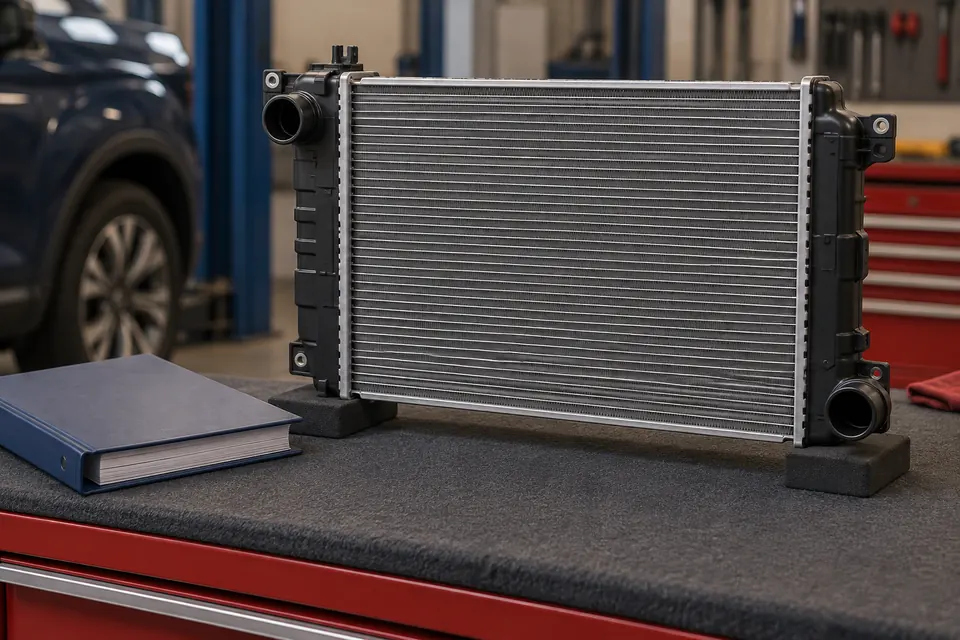
Generated educational illustration: cooling component assessment context. Not an actual customer repair, diagnostic result, staff member or Boudreaux’s facility.
What to Clarify for Your Vehicle
Report leaks, temperature warnings or fan-related symptoms and arrange safe assessment. Ask which affected cooling parts and attachments are being inspected. Body appearance, cooling function and structural condition are separate repair questions.
Front damage can involve more than the bumper
Radiators, cooling fans, hoses, supports and related components can be close to a front impact area, depending on the vehicle. The visible cover does not define the full inspection scope. A component can require evaluation because of contact, a changed mounting position or a reported symptom.
A cooling concern is not something to assess by continuing to drive until the vehicle overheats. If there is a leak, temperature warning or uncertainty about safe operation, request assistance and transport guidance.
Explain what changed after the impact
Tell the shop about warnings, visible leakage and any unusual fan or temperature behavior. Do not open a hot cooling system or handle leaking fluid to identify it. A safe photograph and the timing of the symptom are more useful.
Ask which components were inspected and what checks support the completed repair. A replaced radiator does not automatically answer every question about the surrounding assembly. Keep any additional mechanical scope with the final collision records.
Example: a front repair with a reported temperature warning
An owner reports that a temperature warning appeared after a front impact. The shop needs that history before assuming the job is limited to the bumper and exterior finish. It should assess the relevant cooling components and any confirmed damage. The warning itself does not identify a particular failed part.
If the estimate adds a radiator, support or another operation after access, ask which finding supports it. A photograph of a leaking area may help locate the concern, but owners should not open a hot system to identify fluid or continue driving to reproduce overheating.
At handoff, request the explanation of the completed mechanical work and any relevant checks. Keep it with the exterior repair scope. If a warning returns, report the exact circumstances promptly. This example illustrates how a symptom changes the inspection conversation; it does not promise that every front impact damages the cooling system or that one replacement resolves every temperature concern.
Related Guidance
A front-end repair can involve several cooling components
The radiator, fans, hoses and related supports can sit close to a front impact area. Their arrangement varies by vehicle, and the bumper’s outward appearance does not reveal the condition of everything behind it. A repair plan may therefore need inspection or disassembly to distinguish direct damage from contact between neighboring components.
Tell the shop about coolant loss, a temperature warning, an unusual fan sound or steam noticed after the collision. Explain when it happened and whether the vehicle was operated afterward. Do not run the engine to demonstrate overheating or continue driving to see if a warning returns. A new warning is information for the repairer, not a home diagnostic test.
Visible liquid also needs professional identification. Air-conditioning condensation and vehicle fluids have different meanings, but an owner should not handle, taste or approach an unknown leak to identify it. Report its approximate location from a safe position and ask about transport before the vehicle moves.
Separate the repair finding from the inspection operation
An estimate may list removal of a cooling component for access without proposing its replacement. Another plan may include a confirmed damaged radiator, fan or hose. Ask which lines describe access, which describe repair or replacement, and which remain subject to inspection. This prevents a long parts list from being mistaken for a final diagnosis.
The surrounding mounts and supports deserve a clear explanation too. Replacing a leaking part does not by itself establish that the attachment area is suitable or that neighboring parts have adequate clearance. Ask what related damage was assessed and how the proposal follows the applicable vehicle repair information.
When a revised scope adds cooling-system work, ask what became visible and why the operation is necessary. The explanation can identify a leak, damaged mounting area or other confirmed finding without claiming that every front collision produces the same failure. Keep the revised estimate and its supporting notes with your claim and authorization records.
Ask what was checked before release
At pickup, ask which cooling-related components were repaired or replaced and which applicable leak or functional checks were completed. Ask whether any temperature warning or related diagnostic concern remains unresolved. A fresh bumper and a cleared message should not be the only explanation of how the cooling concern was addressed.
Follow the vehicle instructions if a warning appears after delivery. Do not open a hot cooling system or remove a pressure cap to investigate. Contact the repairer with the warning wording, time and circumstances, and ask about safe transport. A photograph of a displayed message can help only when the vehicle is safely parked and taking it does not distract the driver.
Boudreaux’s New Orleans and Luling locations handle intake separately. Confirm the selected shop’s arrangements for your collision-related mechanical assessment; general maintenance services should not be assumed from this guide. If the front impact also affected climate control, raise that as a separate concern because engine cooling and cabin air conditioning are different systems.