
BOUDREAUX’S COLLISION · REPAIR EDUCATION
Paint Cure vs Paint Dryness
A coating can be dry enough for one handling step while still subject to specific cure and care requirements. Dry-to-touch, reassembly readiness and readiness for wax or cleaning products are different questions. Product instructions and the completed repair govern the guidance.
Illustration: Paint Cure vs Paint Dryness
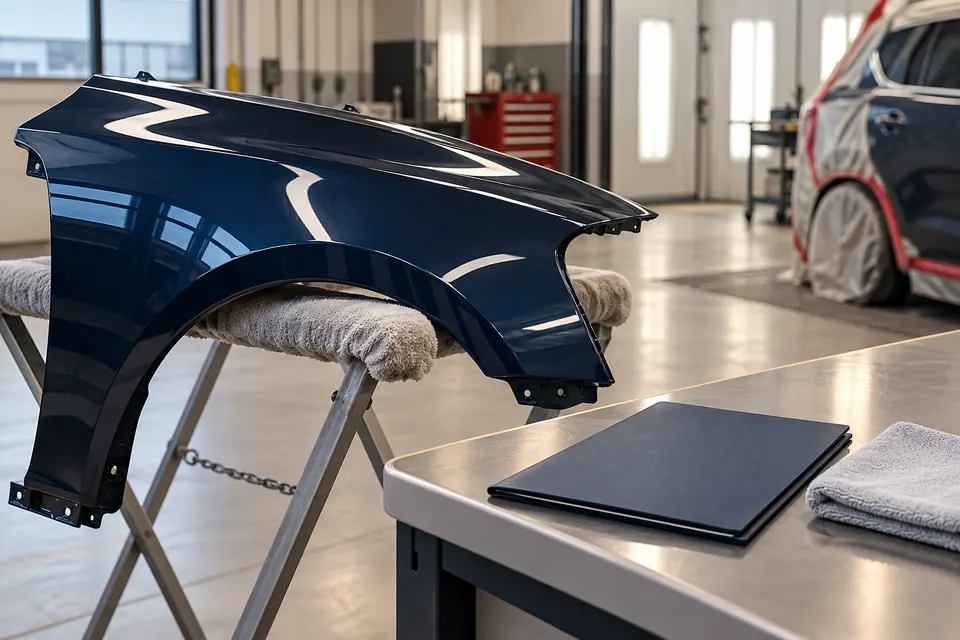
Generated educational illustration: refinish care readiness discussion. Not an actual customer repair, diagnostic result, staff member or Boudreaux’s facility.
What to Clarify for Your Vehicle
Ask the shop for written care instructions that apply to the actual finish. Avoid using a universal number of days for every paint system. If a surface concern appears, document it and contact the shop rather than trying to correct it with abrasive products.
Dry to the touch does not describe every stage
A paint surface can feel dry while its material system is still progressing through curing. Dryness and cure describe different aspects of the process. The relevant conditions and timing depend on the products, application and curing method; a universal rule for every refinished vehicle would be misleading.
Vehicle delivery therefore needs to be paired with aftercare guidance. Permission to drive the vehicle is not automatically permission to apply wax, a coating, adhesive film or every cleaning chemical immediately.
Plan protection work around the actual repair
If you want paint protection film, ceramic coating or another treatment after repair, tell the shop before arranging the appointment. The refinishing provider and the protection installer need compatible guidance for the repaired surface. The installer’s usual timing should not override the paint material’s requirements.
Similarly, ask about washing methods and products rather than assuming the finish needs to remain untouched for an arbitrary number of days. Different activities can have different instructions. Written guidance is easier to follow than a remembered statement that the paint is finished.
A useful aftercare record
Keep the repair delivery date, the refinished areas and the shop’s aftercare instructions together. If the instructions are unclear, ask specifically about the activity you plan: washing, waxing, polishing, applying film or using a particular cleaner.
Report an unexpected finish concern before attempting a correction. Note when it appeared and what products or conditions the vehicle encountered. That information helps the repairer assess the concern without assuming either that the finish was defective or that the owner caused the issue.
Further repair information
PPG: coating and curing-condition background
General background and product examples do not replace the applicable instructions for the actual vehicle, material and operation.
Related Guidance
Keep care questions and finish concerns in the repair record
At delivery, ask for the instructions applicable to the repaired finish and whom to contact if a care direction is unclear. If two providers give conflicting guidance, ask them to clarify it before experimenting with a product. Do not resolve the difference by testing a cleaner, coating or polish on a small repaired area.
If a concern appears later, identify the panel, timing and what was already observed or applied, without declaring incomplete cure to be the cause. Keep any provided instructions and relevant later-service records together. The provider should review the actual condition and materials rather than choose a diagnosis from an owner’s description that the paint looks dry. This guide explains how to organize the next question; it does not establish one paint system, warranty or aftercare interval for every repair at both locations.