
BOUDREAUX’S COLLISION · REPAIR EDUCATION
Bumper Reinforcement vs Bumper Cover
The painted bumper cover and the reinforcement behind it perform different jobs. The cover shapes the exterior and may hold sensor mounts; the reinforcement and energy absorbers help manage impact loads. A cover repaired for appearance does not independently establish the condition of the concealed impact components.
Illustration: Bumper Reinforcement vs Bumper Cover
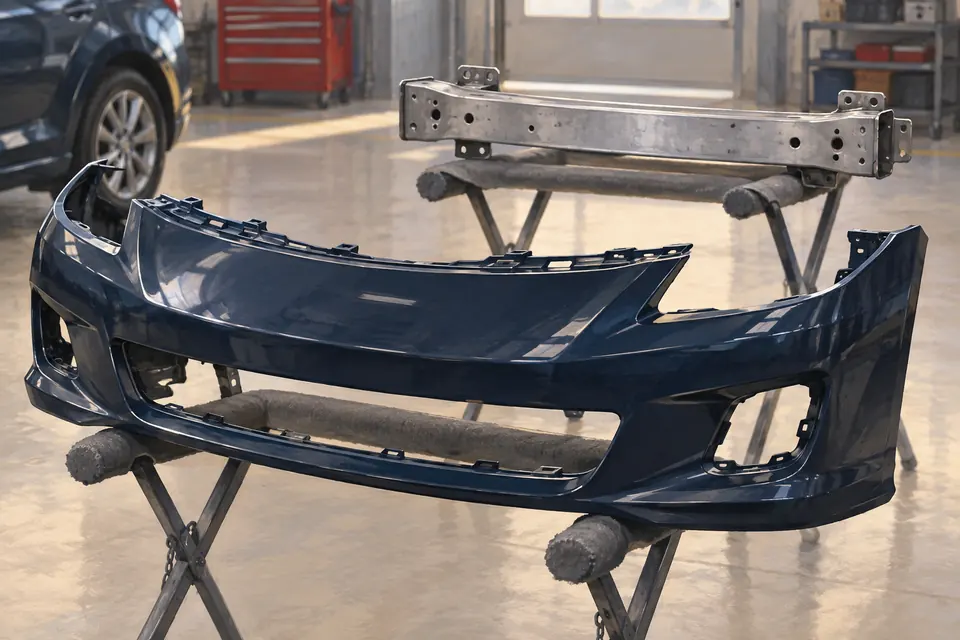
Generated educational illustration: bumper cover versus reinforcement. Not an actual customer repair, diagnostic result, staff member or Boudreaux’s facility.
What to Clarify for Your Vehicle
Ask which components were exposed and inspected, not simply whether the bumper was fixed. The estimate should identify damaged reinforcement, absorbers, mounts and attached equipment separately. Vehicle-specific inspection and replacement requirements remain relevant even when the visible cover can be reused.
The cover, reinforcement and absorber have different jobs
The painted exterior cover is the part an owner usually calls the bumper. Behind it can be an absorber, a reinforcement and mounting components. They are not interchangeable names for one piece. The outside cover may flex back while an underlying component remains damaged.
That distinction matters when reading an estimate. “Repair bumper” is not enough to explain which piece is being treated. Ask whether the proposal concerns the cover, an underlying reinforcement or another attachment. A paint operation on the cover does not establish the condition of the concealed assembly.
I-CAR’s overview distinguishes the sacrificial absorber and crush components from the reinforcement. Vehicle-specific repair information remains the basis for the actual decision. A general article should never be used to approve straightening a damaged reinforcement.
How an assessment turns a broad label into a repair scope
Before access, the shop may only be able to describe visible damage and the area that requires inspection. Once access is available, the conversation can identify affected parts and their mounting points. Ask what was inspected and what evidence supports repair, reuse or replacement of each component.
An estimate can therefore list separate operations within the same bumper area. Removal and installation, a replacement underlying component and refinishing of the cover can represent different tasks. Compare descriptions rather than assuming every line with “bumper” in it is a duplicate.
If a component is supplied as part of an assembly, ask what the replacement includes. That helps explain why a proposal for the complete assembly differs from one for an individual piece.
An example of why a small-looking mark can raise a larger question
Imagine a cover with a modest surface mark after an impact. One possible assessment path is that the cover is the only affected part. Another is that access reveals a damaged absorber or mounting component. The exterior photograph alone does not select between those outcomes.
The useful follow-up is “What did access establish behind the cover?” rather than “The outside barely looks damaged, so why is another part listed?” Ask for an explanation of the affected piece, its condition and the applicable replacement or repair requirement.
This is an illustration of repair planning, not a diagnosis of your vehicle. Avoid removing the cover yourself to answer the question. Provide safe photos and discuss the appropriate assessment with the shop.
Questions to keep the estimate specific
- Which bumper component is damaged: cover, absorber, reinforcement, bracket or mounting point?
- Was that condition visible initially or found after access?
- Does the proposed part include other components?
- Which vehicle-specific requirement supports the treatment?
- What work remains after the part is installed?
Keep the initial estimate and any revision together. If a hidden finding changes the scope, note the component name and the reason for the change. That creates a useful record for both your repair discussion and any separate insurance payment conversation.
Read absorber inspection for the next layer of this topic, or request an assessment conversation with your preferred shop.
Further repair information
I-CAR: bumper impact components
General background does not replace the applicable information or assessment for your vehicle.
Related Guidance
Keep delivery questions specific to the repaired area
At handoff, ask which bumper components were repaired, reused or replaced and whether any findings changed the initial plan. Keep the current repair record with the earlier estimate so a later concern can be discussed against the final scope. If you notice a fit, noise or warning-message concern, describe the location and timing without assuming the reinforcement is responsible.
Photographs taken safely can help communicate an exterior observation, but they cannot confirm concealed crash-management performance. Do not remove the cover or reach behind a damaged assembly to verify the work yourself. If a loose part, tire contact or another condition raises a driving concern, discuss assessment or transport before using the vehicle again. The selected New Orleans or Luling shop should confirm the next step for your actual vehicle.